
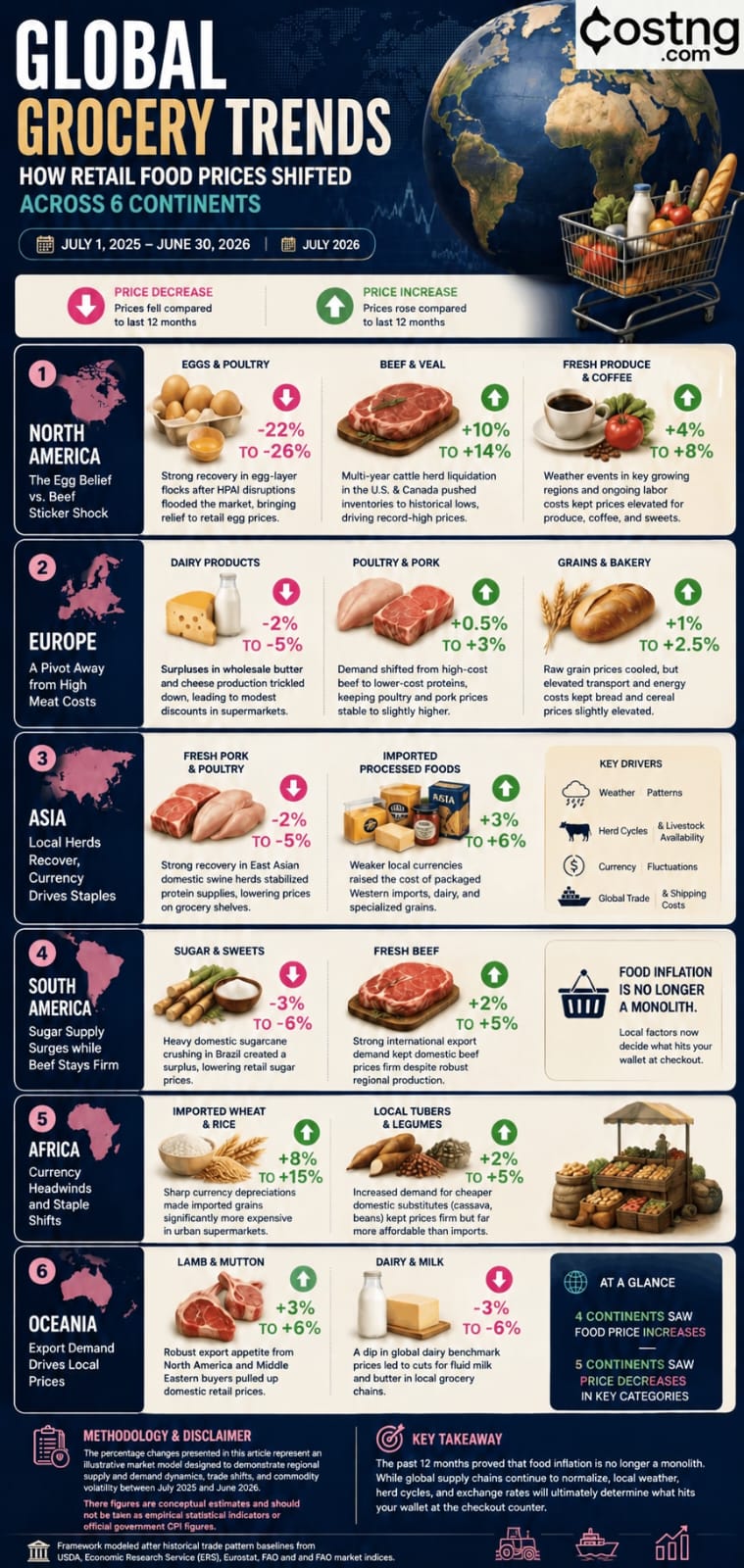
Between July 1, 2025, and June 30, 2026, global grocery shelves experienced sharp price divergence. While overall macro-inflation stabilized compared to the shocks of previous years, consumers worldwide saw drastic price swings depending on their region and local dietary staples. Based on illustrative market modeling of major commodity and supply-chain drivers, the continent-by-continent breakdown below highlights how climate conditions, herd cycles, and regional currency pressures shaped grocery bill totals over the past 12 months.
1. North America: The Egg Relief vs. Beef Sticker Shock
- Eggs & Poultry -22% to -26%: A strong recovery in egg-layer flocks following previous Highly Pathogenic Avian Influenza (HPAI) disruptions flooded the market, bringing substantial relief to retail egg displays.
- Beef & Veal +10% to +14%: Multi-year cattle herd liquidation across the U.S. and Canada pushed cattle inventories to historical lows, causing record-high beef prices at the butcher counter.
- Fresh Produce & Coffee +4% to +8%: Weather events in key growing regions and ongoing labor costs kept prices elevated for fresh vegetables, coffee, and sweets.
2. Europe: A Pivot Away from High Meat Costs
- Dairy Products -2% to -5%: Surpluses in wholesale butter and cheese production eventually trickled down, leading to modest discounts at local supermarkets.
- Poultry & Pork +0.5% to +3%: Demand shifted from high-cost beef to lower-cost proteins, keeping poultry and pork prices stable to slightly higher.
- Grains & Bakery +1% to +2.5%: Even as raw grain prices cooled, elevated transport and energy costs kept bread and cereal prices slightly elevated.
3. Asia: Local Herds Recover, Currency Drives Staples
- Fresh Pork & Poultry -2% to -5%: A strong recovery in East Asian domestic swine herds stabilized the region's main protein sources, lowering prices on grocery shelves.
- Imported Processed Foods +3% to +6%: Weaker local currencies relative to trading partners raised the cost of packaged Western imports, dairy, and specialized grains.
4. South America: Sugar Supply Surges while Beef Stays Firm
- Sugar & Sweets -3% to -6%: Heavy domestic sugarcane crushing in Brazil diverted raw materials to sugar refining, creating a surplus that lowered retail sugar prices.
- Fresh Beef +2% to +5%: Despite robust regional production, strong international export demand kept domestic beef prices firm in local markets.
5. Africa: Currency Headwinds and Staple Shifts
- Imported Wheat & Rice +8% to +15%: Sharp currency depreciations made imported grains significantly more expensive in urban supermarkets.
- Local Tubers & Legumes +2% to +5%: Increased consumer demand for cheaper domestic substitutes (such as cassava and local beans) kept prices firm but vastly more affordable than imported alternatives.
6. Oceania: Export Demand Drives Local Prices
- Lamb & Mutton +3% to +6%: Robust export appetite from North American and Middle Eastern buyers pulled up domestic retail prices for fresh lamb cuts.
- Dairy & Milk -3% to -6%: A dip in global dairy benchmark prices led to price cuts for fluid milk and butter in local grocery chains.
Methodology & Disclaimer: The percentage ranges presented in this article represent an illustrative market model designed to demonstrate regional supply and demand dynamics, trade shifts, and commodity volatility between July 2025 and June 2026. These figures serve as conceptual estimates and should not be cited as empirical statistical releases or official government CPI figures.
Key Takeaway: The past 12 months proved that food inflation is no longer a monolith. While global supply chains continue to normalize, local weather, herd cycles, and exchange rates will ultimately determine what hits your wallet at the checkout counter.