
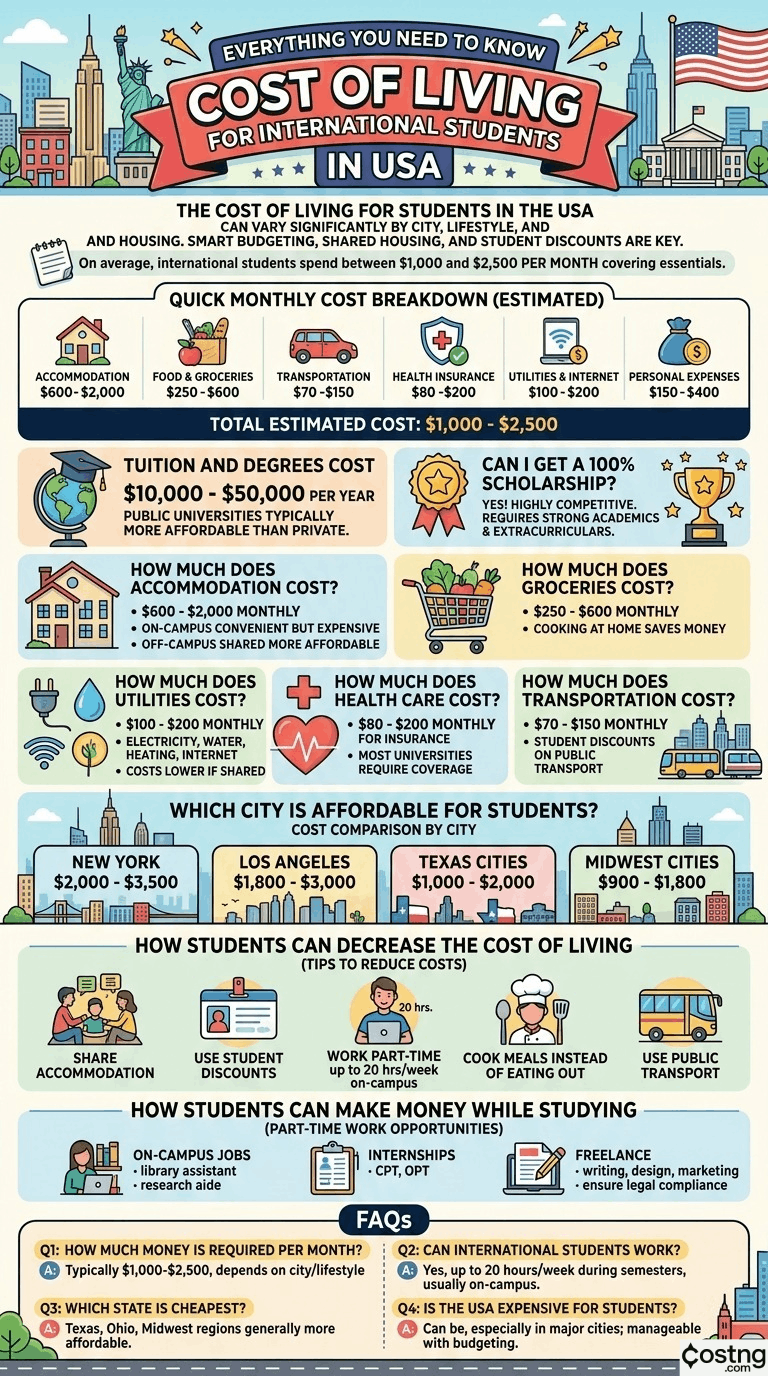
The cost of living for Students in the USA can vary significantly depending on your city, lifestyle, and housing choices. While major cities like New York or Los Angeles can be expensive, many student-friendly cities offer a much more affordable lifestyle without compromising on quality of education or experience.
On average, international students spend between $1,000 and $2,500 per month covering essential expenses like accommodation, food, transportation, and personal needs. However, with smart budgeting, shared housing, and student discounts, it’s possible to manage your expenses efficiently and avoid financial stress.
In this guide, we’ll break down every major cost you need to consider, compare living expenses across different cities, and share practical tips to help you save money while studying in the USA.
Quick Monthly Cost Breakdown:
| Expense Category | Estimated Monthly Cost (USD) |
|---|---|
| Accommodation | $600 – $2,000 |
| Food & Groceries | $250 – $600 |
| Transportation | $70 – $150 |
| Health Insurance | $80 – $200 |
| Utilities & Internet | $100 – $200 |
| Personal Expenses | $150 – $400 |
| Total Estimated Cost | $1,000 – $2,500 |
How Much Does Tuition and Degrees Cost in the USA?
Tuition fees in the USA vary widely based on the university and degree level. On average, international students pay between $10,000 and $50,000 per year. Public universities are usually more affordable, while private institutions charge higher fees. Professional degrees like medicine or MBA programs can cost even more.
Can I get a 100% scholarship in the USA?
Yes, it is possible to get a 100% scholarship in the USA, but it is highly competitive. Fully funded scholarships are offered by top universities and organizations, covering tuition, living expenses, and sometimes travel. Strong academic performance, extracurricular achievements, and a compelling application are essential.
How Much Does Accommodation Cost for Students in the US?
Student accommodation in the USA typically costs between $600 and $2,000 per month. On-campus housing is convenient but can be expensive, while off-campus shared apartments are more affordable. Costs depend on the city, with major cities being significantly more expensive than smaller towns.
How Much Does Groceries Cost to a Student in the US?
Groceries for students in the USA usually cost between $250 and $600 per month. Cooking at home helps save money, while eating out frequently can increase expenses. Costs may vary depending on location, dietary habits, and whether students shop at budget-friendly stores.
How Much Does Utilities Cost to a Student in the US?
Utilities, including electricity, water, heating, and internet, typically cost students between $100 and $200 per month. Costs can be lower if shared with roommates. Expenses may increase during winter due to heating or summer due to air conditioning, depending on the state.
How Much Does Health Care Cost to a Student in the US?
Health care costs for students in the USA usually range from $80 to $200 per month for insurance. Most universities require international students to have health insurance. Without insurance, medical expenses can be very high, so having coverage is essential for financial protection.
How much Does Transportation Cost to a Student in the US?
Transportation costs for students in the USA are generally between $70 and $150 per month. Many cities offer student discounts on public transport like buses and trains. Costs can increase if students use ride-sharing services or own a car, which adds fuel and insurance expenses.
Which City is Affordable for Students?
The cost of living in the USA varies significantly depending on the city you choose. Major metropolitan areas tend to have higher rent and daily expenses, while smaller cities and regions offer a more affordable lifestyle for international students.
Cost Comparison by City
| City | Estimated Monthly Cost (USD) |
|---|---|
| New York | $2,000 – $3,500 |
| Los Angeles | $1,800 – $3,000 |
| Texas Cities | $1,000 – $2,000 |
| Midwest Cities | $900 – $1,800 |
Cities like New York and Los Angeles are among the most expensive due to high housing and living costs. In contrast, Texas and Midwest cities provide a more budget-friendly option, making them popular choices for students looking to reduce overall expenses while studying in the USA.
How Students Can Decrease the Cost of Living in the USA?
Tips to Reduce Living Costs
Managing your expenses as an international student in the USA is possible with a few smart strategies. Small changes in your daily habits can significantly reduce your overall monthly spending.
- Share accommodation: Living with roommates helps split rent and utility costs, making housing much more affordable.
- Use student discounts: Take advantage of discounts on transport, food, entertainment, and software using your student ID.
- Work part-time (up to 20 hrs/week): On-campus jobs can help cover daily expenses and reduce financial pressure.
- Cook meals instead of eating out: Preparing your own meals is much cheaper and healthier than dining out regularly.
- Use public transport: Buses and trains are cost-effective compared to owning a car or using ride-sharing services frequently.
By following these tips, students can better manage their budget and make their study experience in the USA more financially sustainable.
How Students can make Money while Studying in the USA?
Part-Time Work Opportunities
International students in the USA can reduce their financial burden by taking advantage of part-time work options. These opportunities not only help cover living expenses but also provide valuable work experience.
- On-campus jobs: Students can work up to 20 hours per week during semesters in roles like library assistant, research aide, or campus support staff. These jobs are the easiest to access and comply with visa regulations.
- Internships: Many students pursue internships related to their field of study. Programs like CPT (Curricular Practical Training) and OPT (Optional Practical Training) allow students to gain practical experience while earning income.
- Freelance (if legally allowed): Some students explore freelance work such as writing, design, or digital marketing, depending on visa restrictions. It’s important to ensure compliance with legal work guidelines before starting.
These options can help students manage expenses while building skills and experience for future career growth.
FAQs
Q1: How much money is required per month?
→ International students typically need between $1,000 and $2,500 per month to cover living expenses in the USA. This includes accommodation, food, transportation, utilities, and personal costs. The exact amount depends on the city, lifestyle, and housing choices.
Q2: Can international students work in the USA?
→ Yes, international students on an F-1 visa can work up to 20 hours per week during academic sessions. These jobs are usually on-campus. During breaks, students may work full-time, depending on visa rules and university policies.
Q3: Which state is cheapest?
→ States like Texas, Ohio, and other Midwest regions are generally more affordable for students. These areas offer lower rent, cheaper transportation, and overall reduced living costs compared to major cities like New York or California.
Q4: Is the USA expensive for students?
→ The USA can be expensive, but it largely depends on the city and lifestyle. Students living in major metropolitan areas will spend more, while those in smaller cities can manage costs more easily with proper budgeting and smart spending habits.